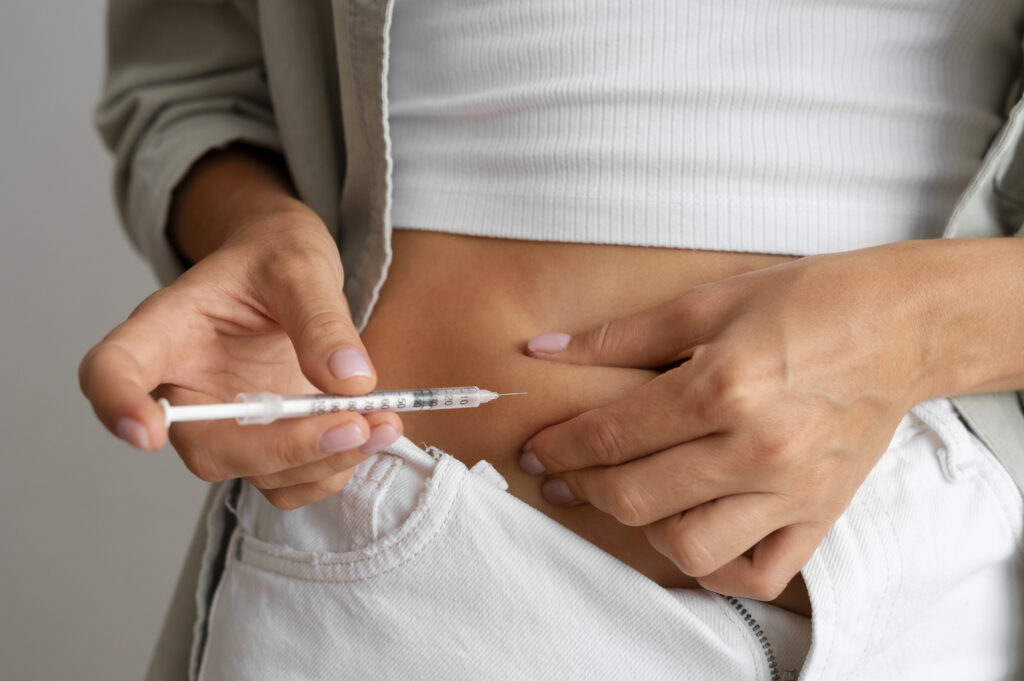
For individuals managing diabetes with insulin therapy, proper injection technique is critical. Yet, one of the most common complications lipohypertrophy often goes unnoticed until it begins to affect glycemic control and overall well-being.
What Is Lipohypertrophy?
Lipohypertrophy refers to the localized thickening of subcutaneous fat tissue, resulting in lumps or swelling at the injection site. This occurs due to repeated insulin injections in the same area, leading to abnormal tissue growth. While it might appear harmless initially, lipohypertrophy can severely compromise insulin absorption and efficacy, leading to unpredictable blood glucose levels.
Why Does It Happen?
The main causes of lipohypertrophy include:
- Repeated Injections at the Same Site: Failure to rotate injection sites consistently can lead to fat tissue damage.
- Use of Blunt Needles: Reusing needles can cause microtrauma to the tissue.
- Improper Technique: Injecting too superficially or too deeply can contribute to tissue irritation.
How Does It Affect Diabetes Management? Lipohypertrophy disrupts insulin absorption in two significant ways:
- Reduced Absorption: Insulin injected into hypertrophied tissue is absorbed more slowly, leading to delayed or incomplete action.
- Variable Absorption: This inconsistency makes blood sugar levels unpredictable, increasing the risk of both hyperglycemia and hypoglycemia.
Signs and Symptoms Patients with lipohypertrophy may notice:
- Painless lumps or swelling at frequently used injection sites.
- Areas of thickened or rubbery skin.
- Increased blood sugar levels without any apparent dietary or lifestyle changes.
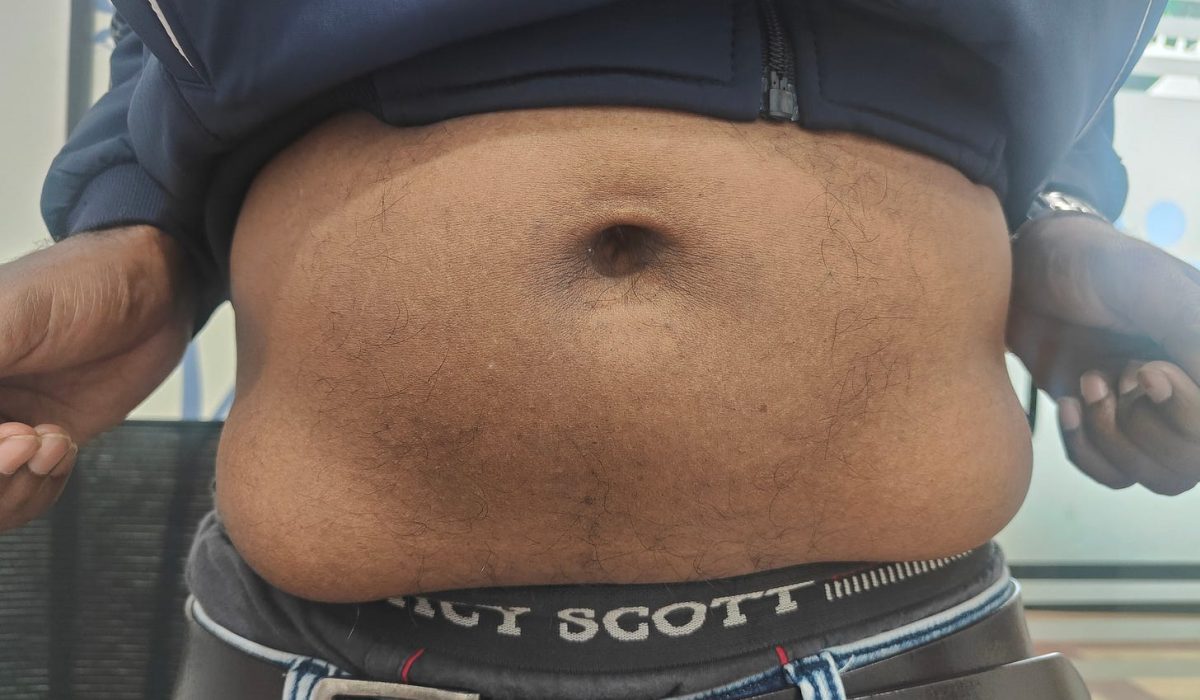
A recent case from my practice highlighted the impact of lipohypertrophy. A patient, was using 120 units of insulin daily, yet his blood sugar levels remained uncontrolled. Upon physical examination, I identified multiple lumps and thickened areas on his abdomen.
The attached image showcases one such affected area:
The visible lump is a classic example of lipohypertrophy.
The skin over the lump appears thicker and rubbery, a hallmark of this condition.
Once I corrected his injection technique, teaching him to rotate sites systematically and use fresh needleshis, insulin requirement dropped dramatically. In just a few weeks, he was using 30 units daily, and his blood sugars stabilized.
How Can It Be Prevented? Preventing lipohypertrophy begins with proper injection practices:
- Rotate Injection Sites: Use different areas of the abdomen, thighs, buttocks, and arms systematically.
- Use Fresh Needles: Avoid reusing needles to reduce tissue trauma.
- Educate Patients: Healthcare providers should teach patients about correct injection angles, depth, and site inspection.
- Regular Site Examination: Patients should palpate and visually inspect injection sites regularly for any changes.
What to Do If Lipohypertrophy Develops? If lipohypertrophy is detected:
- Stop Using the Affected Area: Switch to healthy tissue to allow the hypertrophied site to heal.
- Consult a Specialist: An endocrinologist or diabetes educator can provide guidance on optimizing insulin therapy.
- Consider Adjusting Insulin Doses: Absorption issues may necessitate temporary changes to the dosing schedule.
Final Thoughts While lipohypertrophy is a preventable complication, its impact on diabetes management can be significant. By prioritizing patient education and regular monitoring, healthcare providers can help individuals with diabetes maintain better glycemic control and improve their quality of life.
For more insights on effective diabetes management and endocrine care, subscribe to my blog and stay informed!